

AUDIOVISUAL
Audiovisual Equipment
Audiovisual equipment is the kit from which any professional image and sound system is built: what captures, what processes, what carries the signal and what reproduces it. This Instalia section brings together news on that equipment: cameras, projectors, projection screens and displays, mixers and processors, matrices and extenders, converters and distribution systems. It is distinct from Audiovisual Production, which follows projects and processes, and from Audiovisual Installations, which focuses on deployment and integration in a space: here the territory is the product and what it can do.
- Video and display
- Processing and signal
- AV production and installation
Latest audiovisual equipment news
Cameras, projectors, displays, processors and signal distribution systems for professional production and installation.
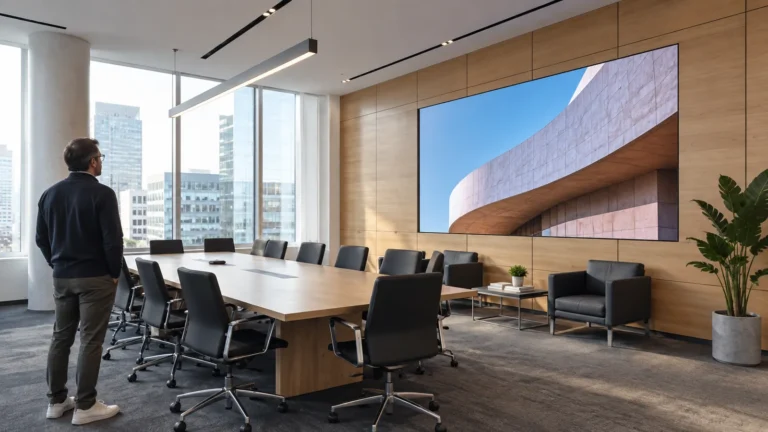
Pixel Pitch in Professional LED Displays: What It Measures and How It Affects Viewing Distance
Pixel pitch is the distance, measured in millimeters, between the center of one LED pixel and the center of the next. The smaller that measurement, the more pixels fit into each square meter, and the higher the resolution a display…

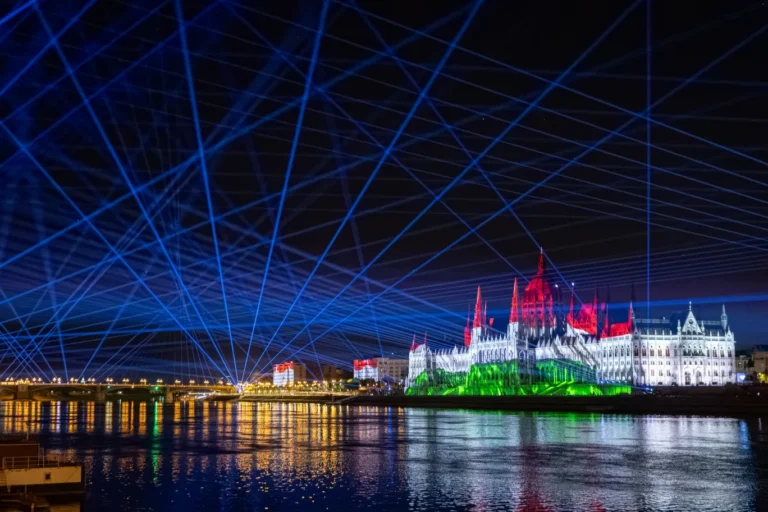
Panasonic PT-RQ45K projection mapping in Budapest: 83 projectors for St Stephen’s Day
Panasonic deployed 83 laser projectors — 67 PT-RQ45K and 16 PT-RQ35K — across the Hungarian Parliament Building, the Széchenyi Chain Bridge and the Pest embankment for Hungary’s St Stephen’s Day celebrations in Budapest.
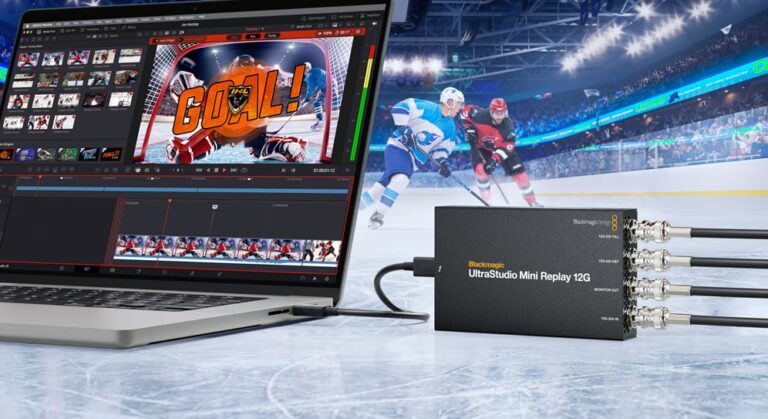
UltraStudio Mini 12G: Blackmagic Design launches its new portable line with Thunderbolt 4
Blackmagic Design has introduced UltraStudio Mini 12G, three compact Thunderbolt 4 devices for capture, playback and simultaneous capture and playback over 12G-SDI and HDMI. The range covers broadcast graphics with fill and key, monitoring and live replay in DaVinci Resolve,…
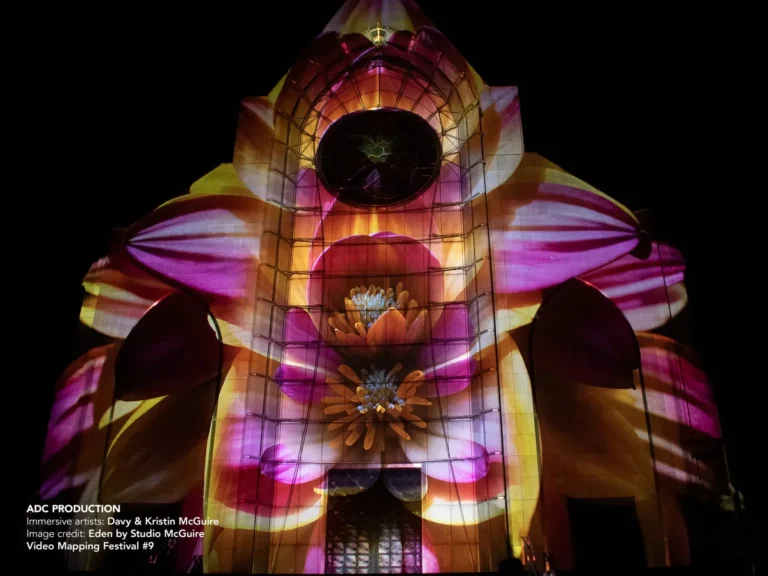
ADC Production expands its rental fleet with ten Christie Griffyn 4K50-RGB projectors
Belgian audiovisual rental company ADC Production has added ten Christie Griffyn 4K50-RGB projectors to its inventory. Rated at 50,000 lumens with a pure RGB laser source, the units are aimed at live events and architectural mapping, and have already run…


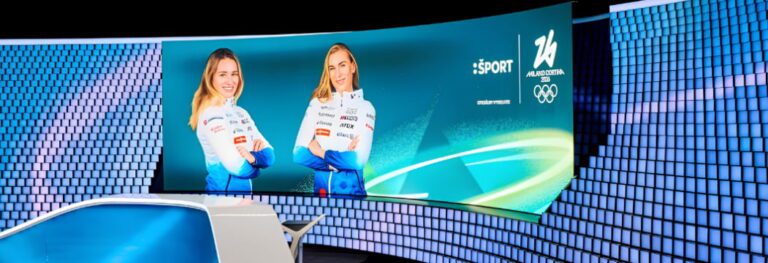
Leyard Europe LED display at STVR for the 2026 Winter Olympics
The Leyard Europe LED display at STVR has made it possible to fully modernise the flagship sports studio of the Slovak public broadcaster in Bratislava for its 2026 Winter Olympics coverage. Built for broadcast production and live sports, the installation…
Explore the rest of the audiovisual field
The sections every piece of kit intersects with: the process that puts it to work, the space it is deployed in, and the rental market.
The process and the projects: how a production is planned, shot and broadcast.
The technology deployed in a space: integration, rooms and fixed systems.
The rental market: fleets, availability and technical service for production.
Technology and equipment for professional audiovisual systems
An audiovisual system is organised as a chain. At capture sit the cameras, the microphones and the content sources; at processing, the video mixers, the scalers, the screen processors and the matrices that decide which signal goes to each destination. Distribution handles the transport — SDI, HDMI, fibre or AV over IP with NDI, Dante and SMPTE ST 2110 — and fixes the latencies and formats everything else will work with.
In projection, the kit does not end at the projector: the projection surface decides as much as the lens. A projection screen is a surface — white, grey or high-gain — calculated to return the light with a given contrast and viewing angle, and it is chosen by format before brand: fixed tensioned frame in rooms and permanent installations, roll-up and motorised where the space has other uses, portable and tripod for events and touring presentations, and rear projection where the beam cannot cross in front of the audience. Gain, contrast ratio and useful angle are the parameters that pair screen and projector; getting them wrong wastes lumens you have already paid for.
The last link is reproduction: projectors, professional displays, video walls and sound systems that return to the audience what went in at the other end. To that chain are added the layers that make it operable — control and automation, monitoring, redundancy and storage — and those that hold it up physically, from rigging to cabling. Getting it right depends less on the catalogue than on how the pieces fit together — resolution, refresh rate, colour space, sync and control protocol — because that is where an excellent piece of kit can be rendered useless next to the wrong one. That fit is decided in audiovisual production and realised in audiovisual installations.

Want to feature on Instalia?
If your company manufactures, distributes or rents out audiovisual equipment, you can present your launches, use cases and product news to Instalia’s professional audience.